
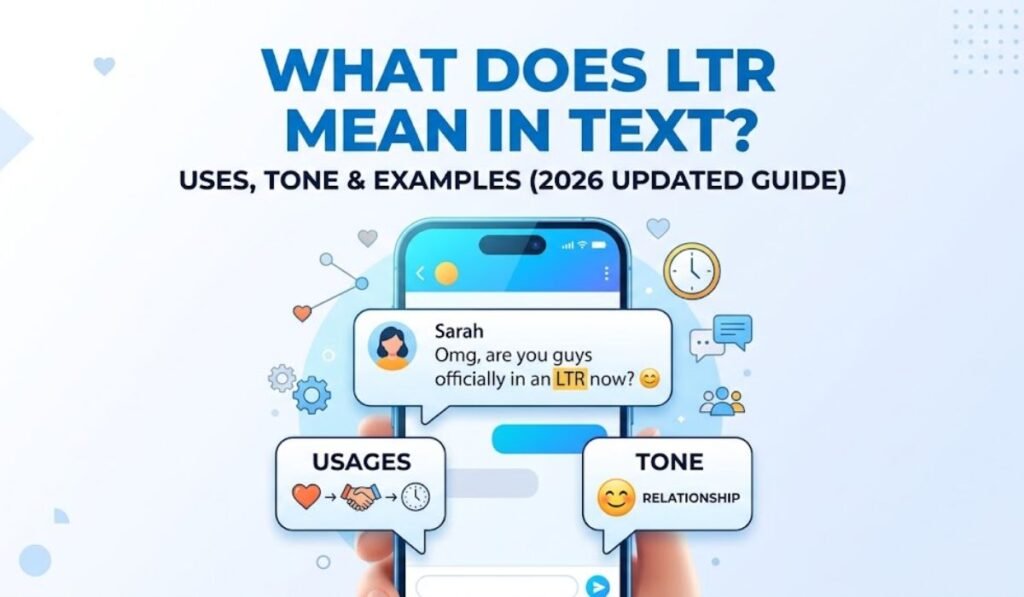
Someone sent you “LTR” and now you’re stuck staring at three letters that could mean two completely different things. That mix-up is more common than you’d think, and getting it wrong can send the wrong signal entirely. Here’s exactly what LTR means, how to tell which version someone’s using, and how to respond without overthinking it. 📱
What Does LTR Mean in Text? 💬
Quick Answer: LTR most often means “Long-Term Relationship” — used in dating apps, bios, and texts to describe wanting a serious, committed relationship. Less commonly, LTR is shorthand for “Later,” used the same way as “TTYL” or “cya later” in casual chats. The correct meaning depends entirely on the conversation it appears in.
Outside of texting, LTR also shows up in tech and design contexts as “Left to Right” (referring to text or reading direction), but that usage is rare in everyday messages and almost never what someone means in a DM or bio.
The Two Meanings, Properly Broken Down 🔤
LTR isn’t a term with one fixed definition — it’s an initialism that borrows its meaning from context. Here’s each version on its own.
LTR Meaning 1: Long-Term Relationship 💍
This is the meaning you’ll run into most on dating apps and in relationship conversations. Someone writing “looking for an LTR” is telling you upfront that they want commitment, not a fling. It’s become a kind of shorthand filter — a fast way to state relationship goals without writing a paragraph about it.
This usage picked up traction as dating apps pushed people toward quick, scannable bios. Instead of typing “I’m interested in something serious and long-term,” people just write LTR and let the abbreviation do the work.
LTR Meaning 2: Later ⏰
In casual texting between friends, LTR can simply mean “later,” functioning like “TTYL” (talk to you later) or “cya.” It’s less common than the relationship meaning today, but it still pops up, especially in quick sign-offs like “gtg, ltr” (got to go, later).
This version has nothing to do with romance — it’s purely about ending a conversation or postponing a topic.
LTR Meaning Urban Dictionary 📖
Slang dictionaries like Urban Dictionary generally list “Long-Term Relationship” as the dominant definition of LTR, with “Later” appearing as a secondary, less-searched entry. Community-sourced slang sites are useful for spotting which meaning is more culturally common, but they don’t replace context — the top-voted definition isn’t always the one that applies to the message you just got. Treat crowd-sourced definitions as a starting point, not the final word.
LTR Meaning in Business 📊
In business and finance writing, LTR occasionally stands for terms like “Loan-to-Repayment,” “Long-Term Rate,” or shows up in company-specific reports and shorthand. It’s not a standardized business abbreviation the way “ROI” or “KPI” are — usage varies by industry and company. If you see LTR in a professional email or report, it’s worth asking for clarification rather than assuming, since the acronym isn’t universally recognized in that setting the way it is in texting culture.
How to Tell Which Meaning Someone Intends 🧠
Context does almost all the work here. A few quick checks will tell you which meaning applies:
- Where did it appear? A dating app bio or a message about relationship goals almost always means Long-Term Relationship.
- What came before it? If the sentence before was about wrapping up a conversation (“I gotta go”) or making future plans (“talk ltr”), it’s the “Later” meaning.
- Who sent it? A romantic interest or match is more likely using the relationship meaning. A friend in a group chat is more likely saying “later.”
- What’s the overall topic? If the conversation is about dating, exes, or relationship status, go with Long-Term Relationship. If it’s logistics or plans, go with “Later.”
When you genuinely can’t tell, it’s fine to ask directly. “Wait, do you mean later or long-term relationship? 😅” is a normal thing to text back.
Real Chat Examples of WYD (How It Actually Looks) 💬
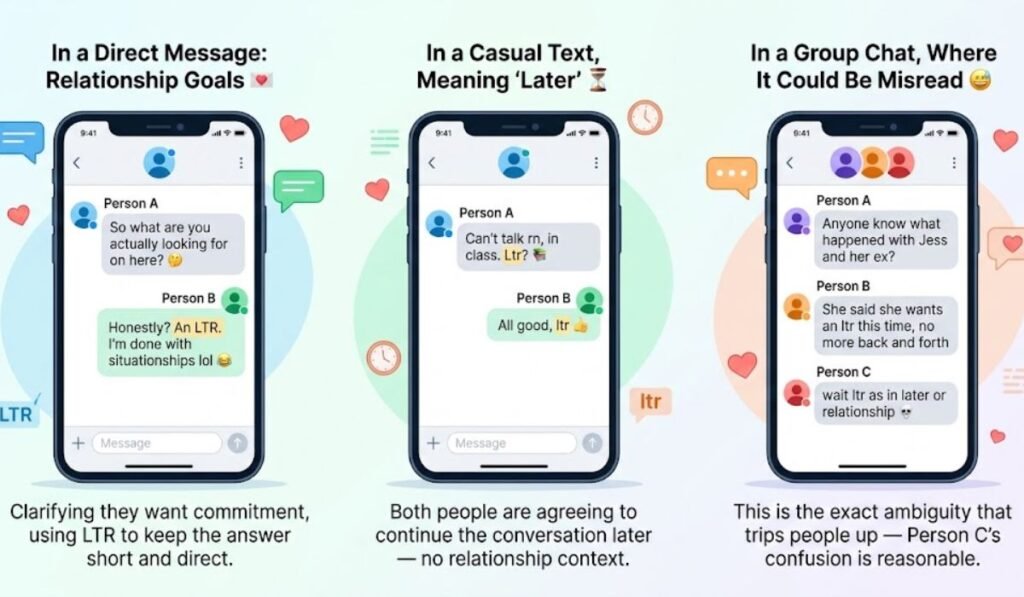
Seeing LTR in actual conversation makes the difference between the two meanings obvious fast.
In a Direct Message, About Relationship Goals 💌
Person A: “So what are you actually looking for on here?”
Person B: “Honestly? An LTR. I’m done with situationships lol”
What it means: Person B is clarifying they want commitment, using LTR to keep the answer short and direct.
In a Casual Text, Meaning “Later” ⏳
Person A: “Can’t talk rn, in class. Ltr?”
Person B: “All good, ltr 👍”
What it means: Both people are agreeing to continue the conversation later — no relationship context at all.
In a Group Chat, Where It Could Be Misread 😅
Person A: “Anyone know what happened with Jess and her ex?”
Person B: “She said she wants an ltr this time, no more back and forth”
Person C: “wait ltr as in later or relationship 💀”
What it means: This is the exact ambiguity that trips people up — Person C’s confusion is completely reasonable here, and asking for clarification is the right move.
Platform-by-Platform: Where You’ll See LTR 📲
The meaning tends to shift slightly depending on where you encounter it, mostly because each platform has its own dominant use case.
LTR on Instagram 📸
On Instagram, LTR shows up most in bios and captions related to dating content, relationship advice pages, or comments under dating-focused posts. It’s almost always the “Long-Term Relationship” meaning here, since Instagram bios function similarly to dating profiles for many users.
LTR on Snapchat 👻
Snapchat conversations move fast and casually, so LTR is more likely to mean “Later” in a private chat between friends. In a Snapchat bio meant to signal dating intent, though, it can still mean Long-Term Relationship — the setting matters as much as the platform.
LTR on TikTok 🎵
On TikTok, LTR usually appears in comments on dating or relationship content, or in captions from creators discussing their relationship status or goals. It’s rarely used as “Later” on TikTok since the platform leans heavily into relationship and dating commentary.
LTR in Regular Texting 💬
In plain SMS or iMessage conversations between friends, both meanings are genuinely common. This is where misreads happen most, since there’s no platform context (like a dating bio) to lean on — you’re relying purely on the conversation itself.
When to Use LTR (And When Not To) ✅❌
When It Works Well
- In a dating app bio to state relationship intentions clearly and quickly
- In a casual conversation with a match or partner about what you’re looking for
- Between friends, as a quick sign-off meaning “later”
- In comments on dating-related content where the context is already established
When to Avoid It
- In professional emails or workplace messages, where it reads as unclear or unprofessional
- With someone new who might not share the same texting shorthand, especially across generations
- In a message where the topic isn’t already clear, since it increases the odds of a mix-up
- In formal writing of any kind
Is Saying “I Want an LTR” a Big Deal? 💭
Saying you want an LTR isn’t a dramatic confession — it’s more like stating a preference upfront, similar to saying you’re vegetarian before choosing a restaurant. It sets an expectation early so both people know what they’re working toward. Some people find it refreshingly direct; others feel it’s too much, too soon, especially early in a conversation.
Context and timing matter more than the phrase itself. Saying it in a dating bio reads as confident and clear. Saying it three messages into a brand-new conversation might come across as intense, depending on the person.
Why People Use This (Psychology) 🧩
Shorthand like LTR exists partly because typing full phrases on a phone is slow, but there’s a social layer too. Using LTR lets someone state a serious intention while keeping the tone light and casual — it softens a big statement (“I want commitment”) by wrapping it in internet slang instead of a heavier sentence.
It also acts as a filtering tool. On dating apps especially, stating “LTR only” upfront can save time by discouraging matches who aren’t looking for the same thing, before either person invests emotional energy.
A Common Mistake People Make ⚠️
The most frequent mix-up isn’t confusing LTR with an unrelated term — it’s assuming the “Long-Term Relationship” meaning applies everywhere, even in casual, non-dating contexts. Someone might read “ltr, gotta run” as a relationship comment when it’s actually just a quick goodbye, leading to confusion or an awkward follow-up question.
The fix is simple: always check the sentence around LTR before reacting to it, rather than assuming based on the letters alone.
LTR vs. Similar Relationship Slang 🔍
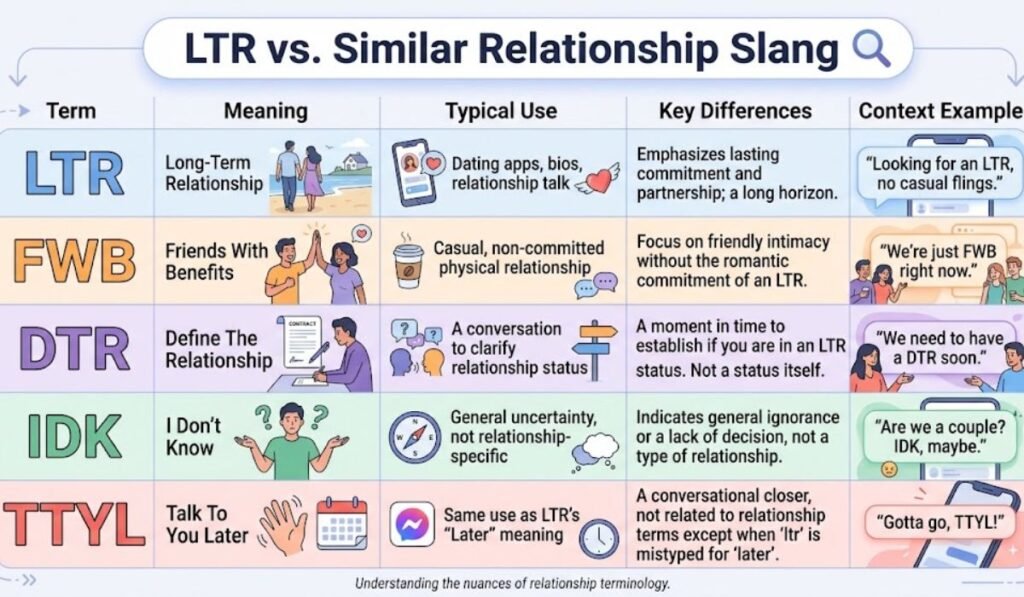
| Term | Meaning | Typical Use |
| LTR | Long-Term Relationship | Dating apps, bios, relationship talk |
| FWB | Friends With Benefits | Casual, non-committed physical relationship |
| DTR | Define The Relationship | A conversation to clarify relationship status |
| IDK | I Don’t Know | General uncertainty, not relationship-specific |
| TTYL | Talk To You Later | Same use as LTR’s “Later” meaning |
LTR stands out from FWB and ONS because it signals the opposite intent — commitment rather than something casual. It’s closer in spirit to DTR, though DTR refers to the conversation itself rather than the relationship type being sought.
How to Respond to “I’m Looking for an LTR” 💬
If You Want the Same Thing
“Honestly, same. I’m not really into the casual thing anymore either.” Being direct back matches their energy and moves the conversation forward honestly.
If You’re Not Sure What You Want
“I hear you — I think I’m still figuring out what I want, but I appreciate you being upfront.” This keeps things honest without overcommitting to something you’re not ready for.
If You Want Something Different
“Thanks for telling me that early — I’m not looking for anything serious right now, so I don’t want to waste your time.” Clarity here is kinder than letting things drag on.
Playful Response (If the Vibe Is Right)
“An LTR? Bold of you to assume I’m past the situationship phase 😂” This works only if the conversation already has an easy, joking tone — read the room first.
Is LTR Rude or Friendly? 🙂
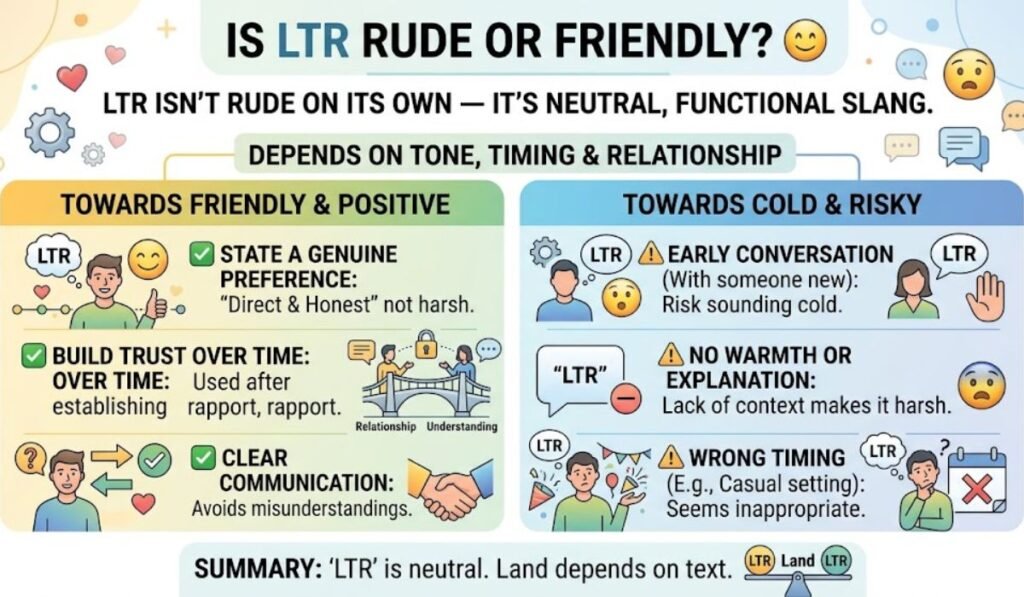
LTR isn’t rude on its own — it’s neutral, functional slang. Whether it lands as friendly, serious, or off-putting depends entirely on tone, timing, and the relationship between the two people texting. Using it to state a genuine preference is generally seen as direct and honest rather than harsh. It only risks sounding cold if it’s dropped without any warmth or explanation, especially early in a conversation with someone new.
Frequently Asked Questions About LTR Meaning in Text
What does LTR mean in a text message?
LTR usually means “Long-Term Relationship” when discussing dating, or “Later” when used casually between friends. The surrounding conversation determines which meaning applies.
Is LTR the same as a serious relationship?
Yes — when used in a dating context, LTR specifically refers to wanting a committed, long-term relationship rather than something casual.
What does LTR mean on Snapchat?
On Snapchat, LTR is often used casually to mean “Later,” especially in quick private chats between friends, though it can mean “Long-Term Relationship” in dating-focused bios.
Can LTR mean something other than relationship or later?
Yes, in technical or design contexts, LTR can stand for “Left to Right,” referring to text direction. This usage is rare in everyday texting and dating conversations.
Is it weird to say you want an LTR right away?
It depends on the setting. Stating it in a dating bio is normal and expected, while saying it very early in a brand-new one-on-one conversation might feel sudden to some people.
How do I know if someone means “later” or “relationship” when they text LTR?
Check the topic of the conversation. If it’s about dating or relationship goals, it means “Long-Term Relationship.” If it’s about ending a chat or making plans, it means “Later.”
Is LTR used more by younger people?
LTR shows up frequently in younger and dating-app-heavy demographics, but it’s not exclusive to any one age group — it’s common wherever texting shorthand and dating apps overlap.
What’s the difference between LTR and DTR?
LTR describes the type of relationship someone wants (long-term), while DTR refers to the act of having a conversation to clarify what a relationship actually is.
Conclusion
LTR carries two very different meanings depending entirely on where and how it’s used — “Long-Term Relationship” in dating contexts, and “Later” in casual texting. The letters never change, but the conversation around them tells you everything you need to know. Next time it shows up on your screen, a quick glance at the topic and platform will clear up any confusion in seconds. 🙌
