
Scrolling through TikTok or Discord, you spot “DNI” in someone’s bio. You pause. What does that mean?
You’re not alone. DNI meaning in text confuses a lot of people the first time they see it. This guide breaks down DNI meaning in text in plain language, with real examples, so you’ll never be confused again.
By the end, you’ll know exactly what DNI means, where it’s used, and how to reply when someone drops it on you.
What Does DNI Meaning in Text?
DNI stands for “Do Not Interact.”
It’s a boundary-setting phrase. People use it to tell certain users not to message them, comment on their posts, or engage with their content at all.
DNI meaning in text is simple at its core: stay away. But the tone behind it can shift a lot depending on context.
Some people use DNI to protect their peace. Others use it to block out specific behavior, like spam or negativity. A few use it jokingly, with no real anger behind it.
Here’s the quick breakdown:
- Full form: Do Not Interact
- Category: Internet slang / Gen Z slang
- Common location: Bios, posts, comments, group chats
- Tone: Ranges from firm to playful
Understanding DNI meaning in text starts with knowing this: it’s a boundary, not always an insult.
Where Is DNI Commonly Used?
DNI meaning in text shows up most in spaces where strangers interact freely.
Think fandom communities, art pages, and public profiles. These are places where people don’t personally know everyone who follows them. DNI helps set ground rules before any conversation even starts.
Common places you’ll spot DNI:
- Twitter/X bios
- Instagram bios and captions
- TikTok comments
- Discord server rules
- Tumblr posts
- Fan pages and roleplay accounts
DNI meaning in text works almost like a digital “keep out” sign. It tells visitors who shouldn’t stick around.
It’s less common in private texting apps like WhatsApp or iMessage. On those platforms, saying “DNI” to someone directly feels blunt, and it usually signals real conflict rather than a general rule.
DNI meaning snowboard
DNI has a completely different meaning in competitive snowboarding.
In this context, DNI stands for “Did Not Improve.” It shows up on scoreboards during events with multiple runs, like Big Air.
Here’s how it works. Snowboarders usually get three runs. Only their best two scores count toward the final result. If a run doesn’t beat the athlete’s earlier score, it gets marked DNI because the score didn’t improve.
This has nothing to do with the “Do Not Interact” slang version. It’s purely a scoring term used in sports broadcasts and results tables.
| Run | Score | Result |
| Run 1 | 89.00 | Counts |
| Run 2 | 71.25 | DNI |
| Run 3 | Lower than Run 1 | DNI |
So if you saw “DNI” trending during a Winter Olympics broadcast, it likely wasn’t slang at all. It was a scoring label.
DNI meaning Olympics
The Olympic use of DNI follows the same idea as snowboarding.
In snowboard big air, athletes get three runs, and only their top two scores count toward the final result. A run that fails to beat a previous score earns the DNI tag.
This term made headlines during the 2026 Winter Olympics in Milano-Cortina. Team USA snowboarder Jake Canter posted an 89.00 on his first run, then scored lower on his next two runs, earning a DNI designation that pushed him out of the finals.
Fans unfamiliar with the term searched “what does DNI mean” during the broadcast. Sports commentators explained it live, since it’s not as widely known as terms like DNF (Did Not Finish) or DSQ (Disqualified).
Tone & Style
DNI meaning in the Olympic context is neutral and technical. There’s no emotion attached to it. It simply reports a scoring outcome.
Compare that to DNI meaning in text on social media, where tone matters a lot. The same three letters can sound protective, angry, or even funny depending on how someone uses them.
Examples of DNI in Conversation
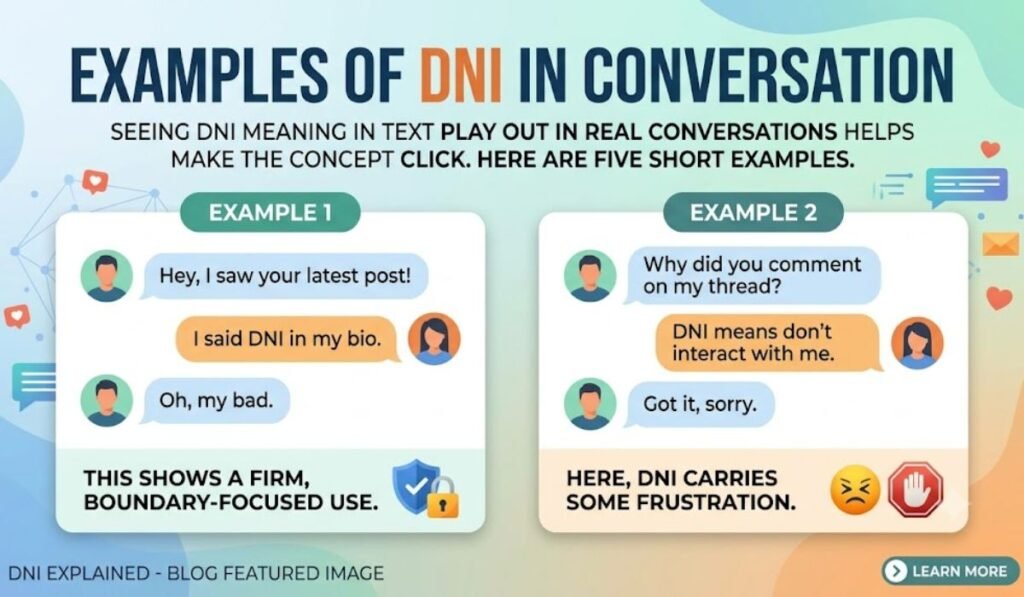
Seeing DNI meaning in text play out in real conversations helps make the concept click. Here are five short examples.
Example 1
A: “Hey, I saw your latest post!” B: “I said DNI in my bio.” A: “Oh, my bad.”
This shows a firm, boundary-focused use.
Example 2
A: “Why did you comment on my thread?” B: “DNI means don’t interact with me.” A: “Got it, sorry.”
Here, DNI carries some frustration.
Example 3
A: “I ate the last slice of pizza.” B: “Pizza thieves DNI.” A: “Worth it though.”
This is a playful, joking use of DNI meaning in text.
Example 4
A: “Can I follow your art account?” B: “Sure, just check my bio for DNI rules first.”
This shows DNI used as a preventive notice, not an active conflict.
Example 5
A: “I don’t support that fandom drama.” B: “Same, that’s why my bio says DNI if you’re part of it.”
This example shows community-based boundary setting.
When to Use and When Not to Use DNI?
Not every situation calls for DNI. Knowing when it fits keeps your communication clear instead of confusing.
When to Use DNI?
- When setting a public boundary in your bio
- When protecting yourself from repeated negative behavior
- When managing a fan account or public community space
- When you want to avoid a specific group of people online
When Not to Use DNI?
- In professional emails or work chats
- When talking to family members unfamiliar with slang
- In formal documents or official messages
- With people who are unlikely to understand internet slang
Using DNI meaning in text in the wrong setting can come across as confusing rather than clear.
Other Meanings of DNI
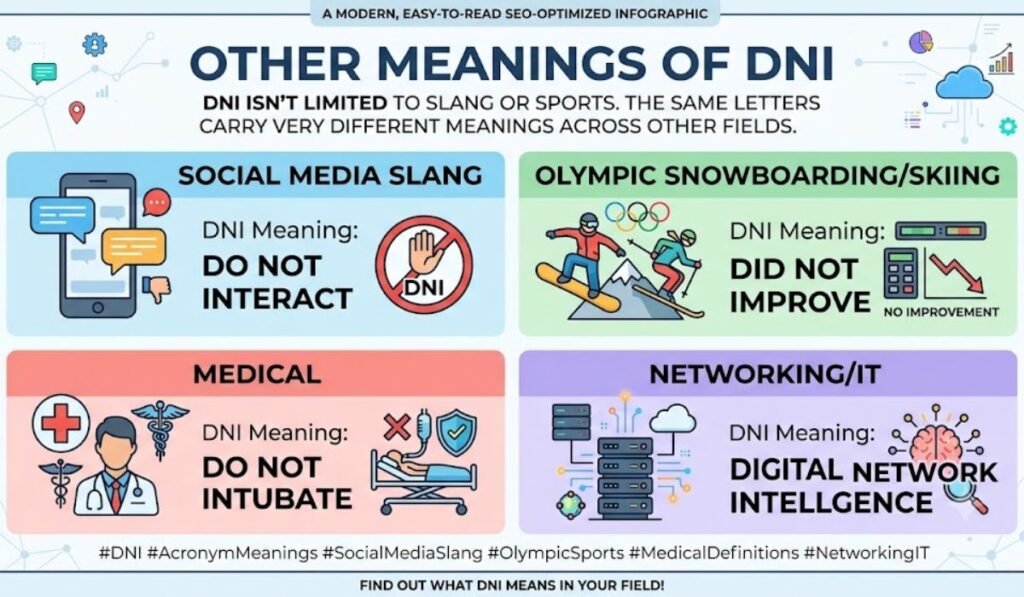
DNI isn’t limited to slang or sports. The same letters carry very different meanings across other fields.
| Field | DNI Meaning |
| Social media slang | Do Not Interact |
| Olympic snowboarding/skiing | Did Not Improve |
| Medical | Do Not Intubate |
| Networking/IT | Digital Network Intelligence |
Who Uses DNI?
DNI meaning in text is mostly a Gen Z and younger millennial term.
Common users include:
- Social media creators managing public accounts
- Fandom and roleplay community members
- Gamers on Discord servers
- Artists sharing work online
- Teens and young adults setting digital boundaries
Older generations or people outside internet culture usually don’t recognize the term right away.
Platforms Where DNI Meaning Is Most Common
DNI meaning in text spreads fastest on platforms built around public interaction and community identity.
- Twitter/X: Extremely common in bios
- TikTok: Used in comments and captions
- Instagram: Common in bio boundary statements
- Discord: Used in server rules and profile notes
- Tumblr: Long-standing home of DNI culture
Private messaging apps rarely see DNI used casually, since those spaces already involve known contacts.
Similar Slang Words or Alternatives
DNI isn’t the only boundary-setting term online. A few similar phrases carry related meanings.
- Block on sight (BOS): Stronger version, implies immediate blocking
- Not for you (NFY): Softer alternative
- Stay away: Direct, non-abbreviated version
- Unfollow me: Specific to social platforms
- Keep scrolling: Casual, less formal boundary phrase
These alternatives share the same purpose as DNI meaning in text: controlling who engages with a person’s content.
Why Do People Use DNI?
People use DNI meaning in text for a few clear reasons.
- To protect their mental peace online
- To avoid unwanted drama or conflict
- To filter out specific groups or behaviors
- To create safer spaces within communities
- To communicate boundaries without lengthy explanations
It’s a shortcut. Instead of writing paragraphs explaining who shouldn’t interact, three letters do the job.
How to Reply When Someone Says “DNI”?
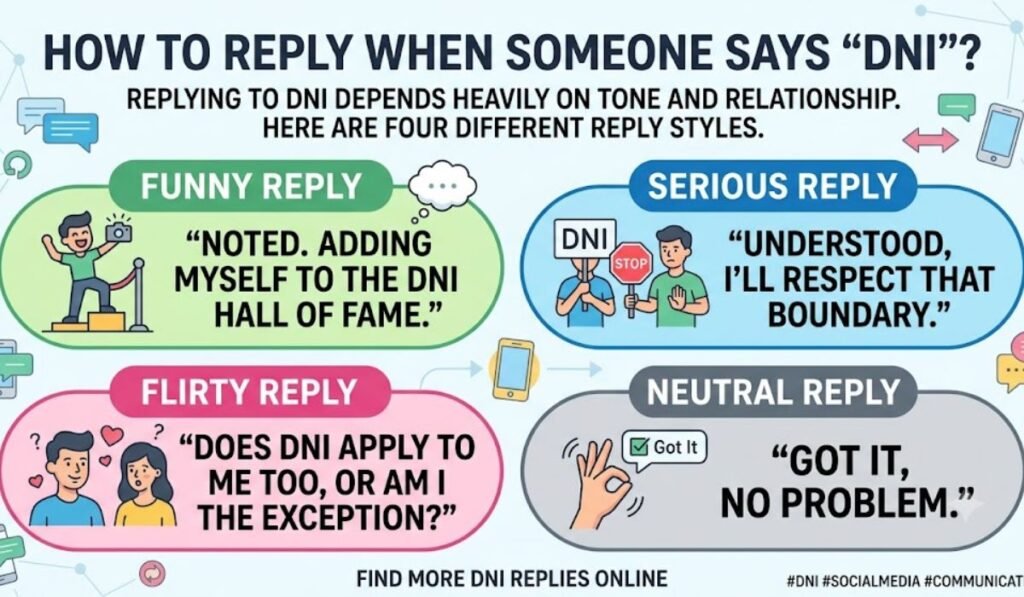
Replying to DNI depends heavily on tone and relationship. Here are four different reply styles.
Funny Reply
“Noted. Adding myself to the DNI hall of fame.”
Serious Reply
“Understood, I’ll respect that boundary.”
Flirty Reply
“Does DNI apply to me too, or am I the exception?”
Neutral Reply
“Got it, no problem.”
Choosing the right reply keeps the interaction smooth and respectful.
Is DNI Rude?
DNI meaning in text isn’t inherently rude.
It’s a boundary, not an insult. Many people use it to protect themselves from harassment, spam, or unwanted attention.
That said, tone changes everything. A calm “DNI if you spread negativity” reads as protective. A harsh “DNI, I don’t want your ugly comments” feels aggressive.
Context and wording decide whether DNI comes across as reasonable or rude.
Frequently Asked Questions
What does DNI mean in a text message?
DNI means “Do Not Interact.” It tells someone not to message, comment, or engage.
Is DNI only used on social media?
Mostly, yes. It’s rare in formal texting or professional communication.
What does DNI mean in the Olympics?
It stands for “Did Not Improve,” used in scoring for events like snowboarding big air.
Is DNI the same as blocking someone?
Not exactly. DNI is a request or boundary. Blocking is an actual action.
Can DNI be used jokingly?
Yes. Many people use DNI meaning in text in a lighthearted, joking way among friends.
What’s the opposite of DNI?
There isn’t an official opposite, but phrases like “feel free to interact” or “DMs open” work similarly.
Conclusion
DNI meaning in text comes down to one simple idea: a boundary.
Whether it’s protecting someone’s peace on social media, marking a snowboarding score at the Olympics, or referring to a government title, DNI changes meaning based on where you see it.
Now that you understand DNI meaning in text, you’ll recognize it instantly, whether it shows up in a bio, a comment section, or a sports broadcast. Context is everything, and you’re now equipped to read it correctly every time.
