
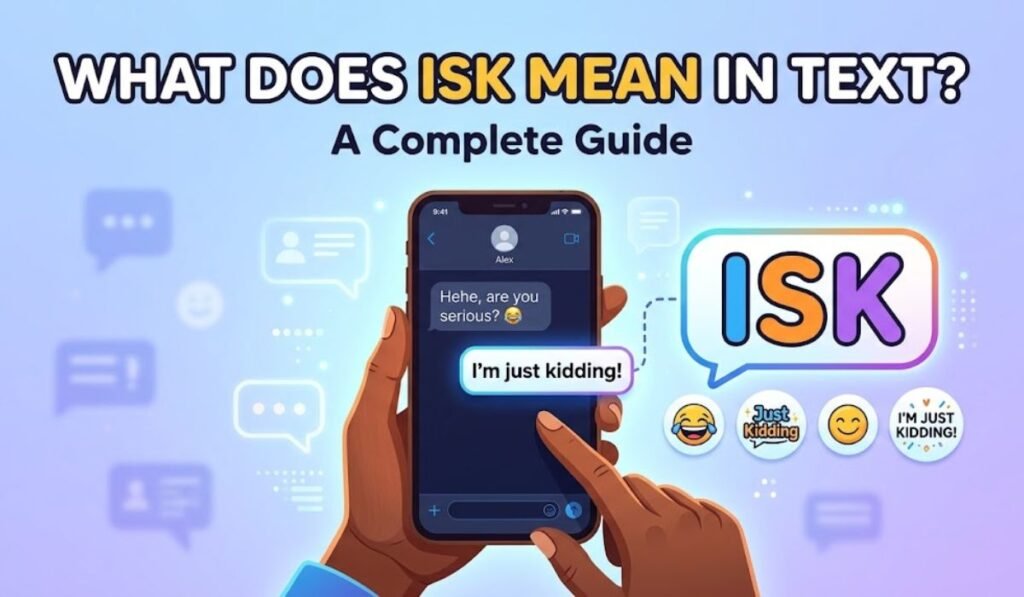
Someone just texted you “isk” and you have no idea what they mean. You’re not alone — this three-letter combo shows up everywhere from group chats to gaming forums, and it doesn’t mean the same thing twice. ISK is a flexible, context-driven abbreviation that shifts meaning depending on where you see it and who’s typing it.
By the end of this guide, you’ll know every common meaning of ISK, how to spot which one applies, and exactly how to reply so you don’t send an awkward text back.
⚡ Quick Answer
In texting, ISK most often means “I Should Know” — used when someone feels they should already be aware of something. It can also stand for “I’m So Kidding” in playful chats, refer to in-game currency (especially in EVE Online), or mean the Icelandic Króna in finance and travel contexts. Context is everything.
What Is ISK in Texting? 💬
ISK belongs to a growing family of short-form text acronyms that trade full sentences for quick keystrokes. Unlike household names such as LOL or BRB, this term hasn’t settled into one universal definition. Instead, its meaning bends around the conversation happening around it.
That flexibility is exactly why so many people pause mid-scroll and ask what does ISK mean in text. The same three letters can carry an apologetic tone, a joking tone, or a completely unrelated financial meaning — sometimes within the same day, from different people.
Common Meanings 🔑
Here’s a breakdown of how the abbreviation typically gets used:
| Context | Likely Meaning |
| Casual texting (missed info) | I Should Know |
| Sarcastic or playful reply | I’m So Kidding |
| Gaming chat (especially EVE Online) | In-game currency |
| Travel or finance talk | Icelandic Króna |
| Business/technical shorthand | Varies by industry |
If a friend texts “isk” after you mention something obvious, they’re likely admitting they should have remembered it. If it shows up after a joke, they’re probably softening a sarcastic comment.
Where Did ISK Come From? 🕰️
Most slang terms have one clean origin story. ISK doesn’t — it grew from at least two separate directions that eventually overlapped in everyday texting.
Financial Origins 💰
Long before it appeared in anyone’s group chat, ISK was already an official currency code. It represents the Icelandic Króna, Iceland’s national currency, used in banking, trade documents, and travel pricing across Europe. This financial meaning predates the texting version by decades and still shows up regularly in business and travel writing.
Digital Evolution 🌐
As internet culture matured, casual communities started reusing existing letter combinations for new, unofficial purposes. Short acronyms became a way to communicate faster in comment sections, forums, and early messaging apps, and three-letter combos like ISK were an easy target for reinvention.
Texting Adaptation 📲
Once smartphones and social apps normalized quick, lowercase replies, ISK settled into casual texting as shorthand for “I Should Know.” It fit the same category as idk or tbh — small, low-effort acknowledgments that keep a conversation moving without a full sentence.
What Does ISK Mean in Gaming? 🎮
Gamers have their own well-established use of ISK, and it has nothing to do with texting slang.
In-Game Currency Meaning 🪙
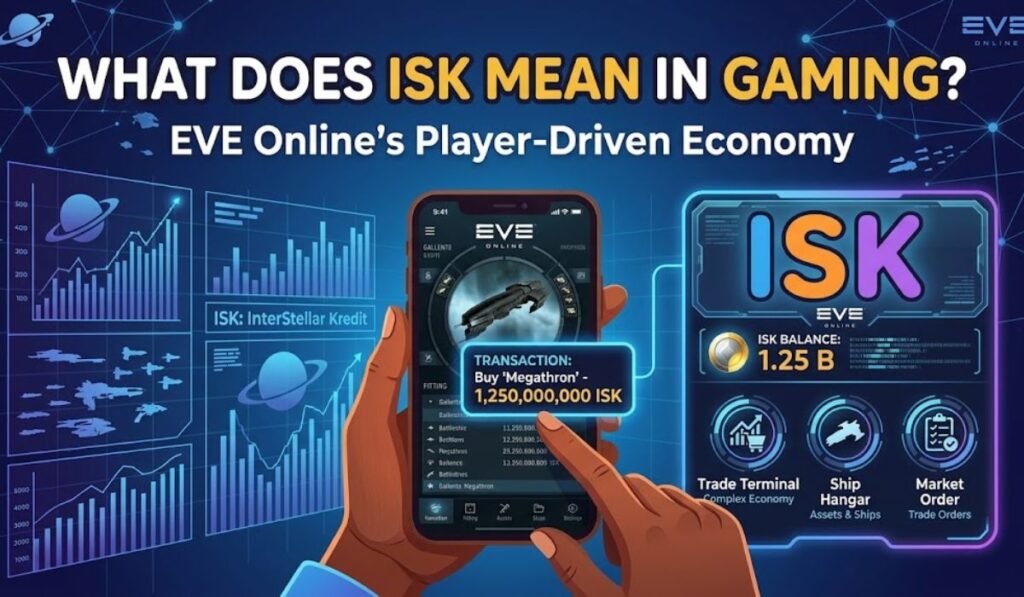
In the massively multiplayer game EVE Online, ISK is the official in-game currency, used to buy ships, equipment, and trade goods between players. It functions similarly to gold or credits in other games, and players track their ISK balance the way they’d track real money in a budget.
Why Gamers Use ISK 🚀
Because EVE Online has a genuinely complex player-driven economy, ISK gets discussed constantly in trade chats, forums, and voice calls. Someone might type “need more isk for that ship” mid-game, and any teammate familiar with the game instantly understands it’s about currency, not confusion or sarcasm.
ISK Meaning in the USA 🇺🇸
Everyday Usage
In American texting culture, ISK usually leans toward the casual “I Should Know” meaning, especially among younger texters who favor short reactions over full sentences. It often pops up in situations where someone is mildly embarrassed about forgetting a name, date, or detail.
Cultural Influence
US-based platforms have played a big role in normalizing minimalist texting. Apps built around speed and brevity encourage short reactions like ISK instead of longer explanations, which is part of why the term keeps resurfacing in American group chats and comment threads.
What Does ISK Mean on TikTok? 🎵
On TikTok, ISK tends to show up in comment sections more than captions. Commenters use it to admit they’re catching up late on a trend or reference, almost like a shorthand shrug. It occasionally appears with a joking tone too, especially under comedic videos where the commenter is clearly being sarcastic rather than genuinely confused.
What Does ISK Mean on Snapchat? 👻
Snapchat conversations move fast, and ISK fits right into that rhythm. It’s commonly used as a quick, low-effort reply when someone doesn’t want to type out a longer response — similar to sending “idk” but with a slightly more self-aware, “I probably should’ve known that” tone.
What Does ISK Mean on Instagram? 📸
On Instagram, especially in DMs and comment replies, ISK often shows up after a friend shares news or a memory the other person forgot. It’s a light, non-committal way to acknowledge a gap in memory without making the exchange feel awkward.
ISK vs Other Text Abbreviations 🔤
People frequently mix ISK up with similar-looking acronyms, which only adds to the confusion.
Comparison Table
| Abbreviation | Meaning | Tone |
| ISK | I Should Know / I’m So Kidding | Casual, context-dependent |
| IDK | I Don’t Know | Neutral, straightforward |
| IKR | I Know, Right | Agreement |
| JK | Just Kidding | Playful |
| TBH | To Be Honest | Sincere |
The key difference is that IDK is fixed and unambiguous, while ISK genuinely changes meaning based on tone and situation. Mixing the two up is a common source of mixed signals in text conversations.
Emotional and Psychological Meaning 🧠
What It Can Suggest
Beyond the literal definition, ISK often carries a small emotional undertone. When used as “I Should Know,” it can signal mild embarrassment, self-awareness, or a light attempt to move past forgetting something without dwelling on it. When used as “I’m So Kidding,” it usually signals that the sender doesn’t want their previous message taken seriously.
Reading the emotional layer matters more than memorizing the definition, since the same word can soften an apology or defuse a joke depending on what came right before it.
ISK in Social Media and Text Culture 🌍
How It’s Used Online
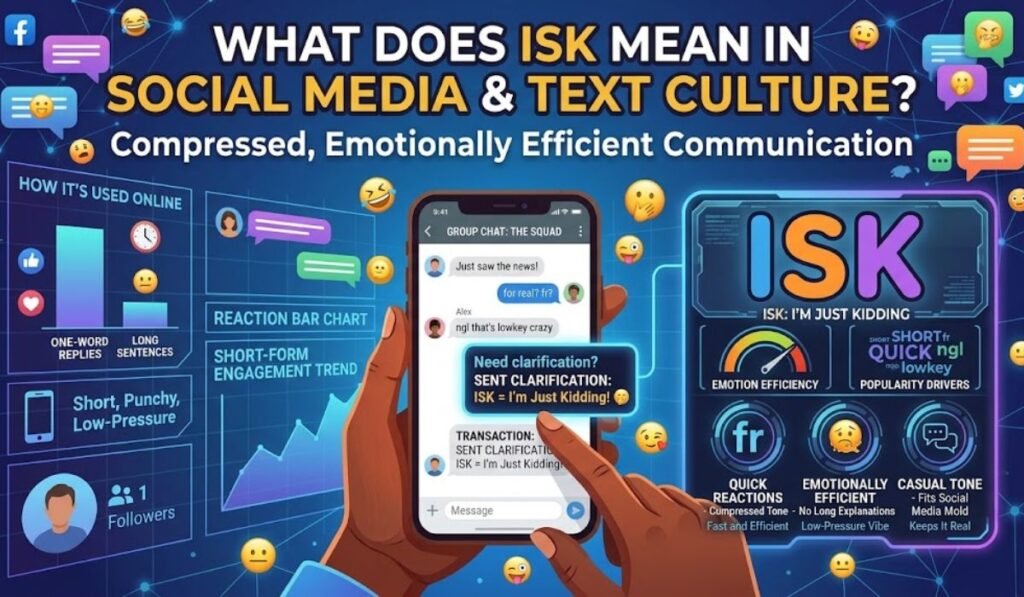
Social platforms reward short, punchy language, and ISK fits that mold. It shows up most often as a one-word reply rather than as part of a longer sentence, which keeps the tone casual and low-pressure.
Why It Became Popular
Its popularity comes from the same forces that pushed forward abbreviations like fr, ngl, and lowkey — a broader shift toward compressed, emotionally efficient texting. People want to communicate a feeling quickly without typing a full explanation, and ISK does that job well.
Cross-Cultural Meanings of ISK 🗺️
International Context
Outside of casual texting, ISK holds a very specific and unambiguous meaning internationally: it’s the recognized currency code for the Icelandic Króna, used in banking systems, currency exchange listings, and trade documentation.
Cultural Differences
In regions with less exposure to English-language internet slang, ISK is far more likely to be understood only as a currency reference. In English-speaking online communities, the slang meaning tends to dominate, especially among younger users active on social apps.
Misunderstandings and Confusion 😵
Common Issues
A few recurring mix-ups happen with this term:
- Assuming ISK always means “I don’t know” (that’s IDK, a different acronym)
- Missing sarcasm and taking “I’m So Kidding” literally
- Confusing gaming currency talk for texting slang in unrelated conversations
- Assuming international contacts will recognize the slang meaning
Context clues — the topic of conversation, tone, and platform — usually resolve the confusion within a message or two.
Is ISK Formal or Informal? 🎓
Formal vs Casual Use
ISK is strictly informal in its texting-slang form. It belongs in casual conversations between friends, not in professional emails, cover letters, or formal messages. The financial meaning (Icelandic Króna), on the other hand, is entirely appropriate in formal, business, and travel contexts.
When to Avoid It
Avoid using the slang version of ISK in workplace communication, academic writing, or with contacts who may not be familiar with internet abbreviations. When in doubt, spell out the full phrase instead.
How ISK Has Changed Over Time 📈
Evolution Timeline
- Early use: Recognized almost exclusively as the Icelandic Króna currency code
- Online forums: Started appearing informally in niche gaming and finance discussions
- Gaming communities: Gained a second, unrelated meaning as in-game currency in EVE Online
- Texting culture: Adopted casually as “I Should Know” and later “I’m So Kidding”
What Changed
The biggest shift is how contextual the term has become. Rather than converging on one meaning, ISK split further apart as more communities adopted it for their own purposes, which is part of why newcomers find it confusing today.
When Should You Use ISK? ✅
Best Situations
- Replying to a friend when you genuinely forgot something minor
- Softening a joke you don’t want taken seriously
- Casual gaming chats about EVE Online currency
- Informal social media comments among people who already use slang regularly
When Not to Use It
- Professional emails or workplace chats
- Conversations with people unfamiliar with internet slang
- Formal writing or academic contexts
- Situations where clarity matters more than brevity
Is ISK Rude or Friendly? 🙂
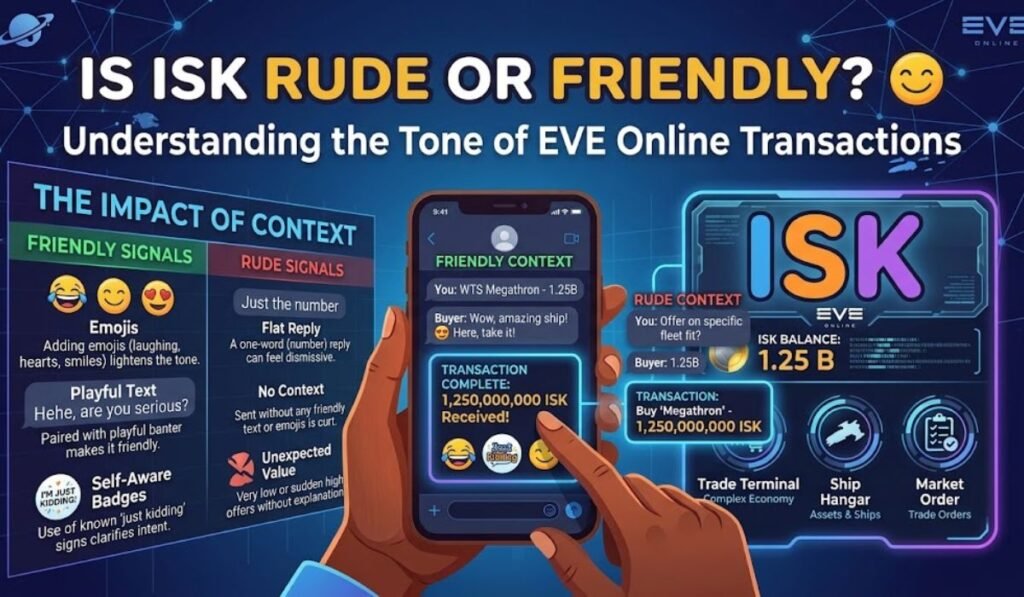
ISK isn’t inherently rude. Most of the time, it reads as light, self-aware, or playful rather than dismissive. The tone depends heavily on what precedes it — paired with a laughing emoji, it usually feels friendly; sent as a flat, one-word reply with no other context, it can occasionally come across as curt. When unsure, adding a follow-up word or emoji helps signal the intended tone clearly.
Frequently Asked Questions About ISK Mean in Text
What does ISK mean in a text message?
ISK most commonly means “I Should Know” in casual texting, used when someone feels they should already be aware of something. It can also mean “I’m So Kidding” depending on the conversation’s tone.
Is ISK the same as IDK?
No. IDK means “I Don’t Know” and is straightforward, while ISK is more context-dependent and can mean several different things depending on tone and platform.
What does ISK mean in gaming?
In gaming, particularly EVE Online, ISK refers to the game’s official in-game currency used to buy ships, gear, and trade goods between players.
Does ISK mean money?
Yes, in financial and travel contexts, ISK is the official currency code for the Icelandic Króna, Iceland’s national currency.
Is ISK slang appropriate for professional messages?
No. The slang meaning of ISK is strictly informal and should be avoided in workplace or professional communication. Spell out your meaning instead.
How do I reply when someone texts me ISK?
Respond based on context: if it seems like an admission of forgetting something, a simple “no worries!” works well; if it follows a joke, treat it as a playful sign-off rather than something serious.
Where is ISK most commonly used online?
It appears most often on TikTok comment sections, Snapchat replies, and Instagram DMs, typically as a short, low-effort response rather than in longer captions or posts.
Can ISK be used sarcastically?
Yes. It’s frequently used sarcastically to acknowledge forgetting something obvious, often paired with a laughing emoji to signal the sender isn’t genuinely upset about it.
Conclusion
ISK isn’t a slang term with one fixed definition — it’s a chameleon that adapts to whatever conversation it lands in. Whether it means “I Should Know,” “I’m So Kidding,” in-game currency, or Iceland’s official money, the surrounding context almost always makes the intended meaning clear within a message or two. Next time it shows up in your inbox, you’ll know exactly how to read it — and how to reply.
