

If you’ve seen “DOE” written on a medical chart or lab report, you’re probably searching for the DOE medical abbreviation meaning right now. In simple terms, DOE stands for “Dyspnea on Exertion.” It describes shortness of breath that shows up during physical activity. This guide breaks down the DOE medical abbreviation meaning, its causes, symptoms, and treatment options in plain, easy-to-follow language.
Doctors use this term daily. Patients, however, often feel confused when they first see it. This article clears up every doubt about the DOE medical abbreviation meaning and how it applies to real health situations.
What Does DOE Mean in Medical Terms? – DOE Medical Abbreviation Meaning Explained
DOE stands for Dyspnea on Exertion. It refers to breathlessness that happens during or right after physical effort. This is one of the most searched health abbreviations because it appears often in cardiology and pulmonology notes.
The DOE medical abbreviation meaning is straightforward once broken into two parts. “Dyspnea” means difficulty breathing. “On Exertion” means it happens during activity, not while resting. Together, they describe a very specific type of breathing problem.
Why Is DOE Important?
DOE matters because it’s often an early warning sign. It can point to heart, lung, or blood-related issues before other symptoms appear. Doctors track DOE carefully because it helps them catch problems early.
Understanding the DOE medical abbreviation meaning gives patients a head start. It allows people to describe their symptoms accurately during doctor visits. That accuracy can speed up diagnosis and treatment.
What Is Dyspnea?
Dyspnea is the medical term for uncomfortable or difficult breathing. It’s a feeling, not a disease. People describe it as breathlessness, air hunger, or chest tightness.
Dyspnea can be sudden or long-lasting. It can happen at rest or only during activity. When it happens specifically during activity, doctors label it DOE.
What Does “On Exertion” Mean?
“On exertion” simply means during physical effort. This could be walking, climbing stairs, or exercising. The key point is that symptoms appear or worsen with movement.
This distinction matters a lot in diagnosis. Breathlessness at rest suggests something different than breathlessness only during activity. That’s why the full DOE medical abbreviation meaning includes this activity-based context.
Common Symptoms of DOE
DOE doesn’t show up alone. It usually comes with other physical signs.
- Shortness of breath during walking or climbing stairs
- Rapid or shallow breathing
- Chest tightness during activity
- Fatigue that comes on quickly
- Wheezing or coughing during exertion
- Feeling the need to stop and rest often
What Causes DOE?
Many different health conditions can trigger DOE. Some are minor. Others need urgent medical attention.
Heart-Related Causes
Heart problems are among the most common triggers. Conditions like heart failure and coronary artery disease reduce how well the heart pumps blood. This makes physical activity feel much harder than normal.
Lung-Related Causes
Lung diseases limit how much oxygen reaches the bloodstream. Asthma, COPD, and pulmonary hypertension are frequent causes. These conditions make breathing labored, especially during movement.
Blood Disorders
Low red blood cell counts reduce oxygen delivery throughout the body. Anemia is the most common blood-related cause of DOE. Even mild activity can feel exhausting when oxygen levels drop.
Lifestyle Factors
Poor fitness, excess weight, and smoking all contribute to DOE. These factors reduce lung efficiency and cardiovascular stamina. The good news is that lifestyle-related DOE often improves with healthier habits.
Other Medical Conditions
Thyroid disorders, obesity, anxiety, and deconditioning can also cause DOE. Sometimes multiple factors overlap. This is why proper diagnosis is so important.
Risk Factors
Certain groups face a higher chance of developing DOE.
- People with heart disease history
- Smokers or former smokers
- Individuals with obesity
- Older adults
- People with sedentary lifestyles
- Those with chronic lung conditions
How Doctors Evaluate DOE
Doctors start by asking detailed questions. They want to know when symptoms began, how severe they are, and what triggers them. This helps narrow down the possible causes quickly.
The evaluation also includes reviewing medical history and lifestyle habits. This step is crucial to understanding the full DOE medical abbreviation meaning in a patient’s specific case.
Physical Examination
A physical exam usually follows the initial history review. Doctors check heart rate, lung sounds, and oxygen levels. They also look for swelling, skin color changes, and signs of fluid buildup.
This exam helps rule out obvious causes fast. It also guides which tests should come next.
Common Diagnostic Tests
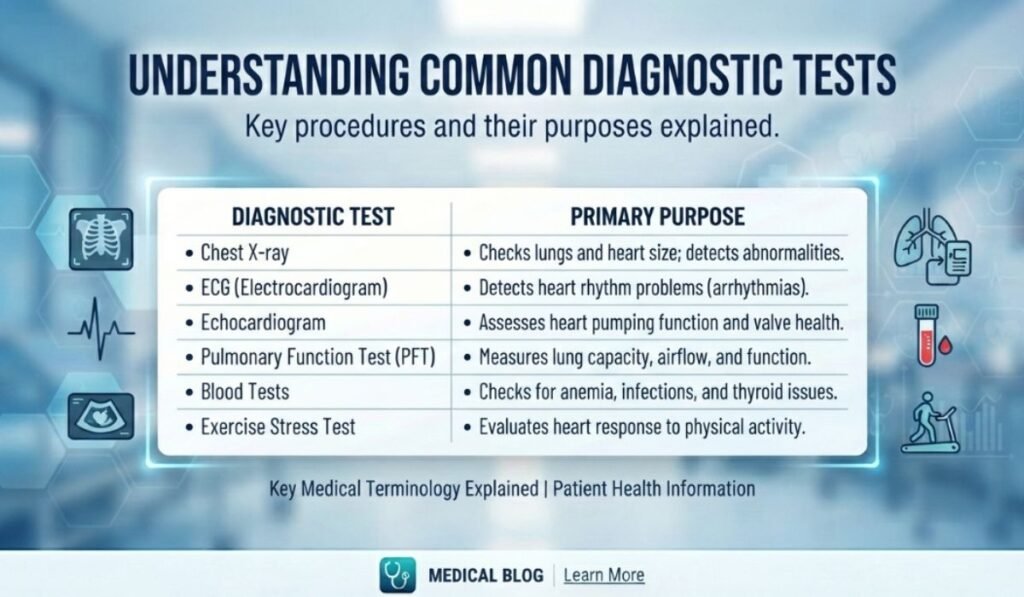
| Test | Purpose |
| Chest X-ray | Checks lungs and heart size |
| ECG (EKG) | Detects heart rhythm problems |
| Echocardiogram | Evaluates heart pumping function |
| Pulmonary function test | Measures lung capacity |
| Blood tests | Checks for anemia or infection |
| Pulse oximetry | Measures oxygen saturation |
DOE vs. SOB: What’s the Difference?
SOB stands for Shortness of Breath. It’s a broader term that can happen at rest or during activity. DOE is more specific because it only refers to breathlessness triggered by exertion.
Doctors prefer using DOE when documenting activity-related symptoms. This precision helps with accurate diagnosis and coding.
DOE vs. Orthopnea
Orthopnea is breathlessness that happens while lying flat. It usually improves when a person sits up. DOE, on the other hand, happens during physical movement, not body position.
Both symptoms can appear together in heart failure patients. Doctors use each term separately to track different aspects of the condition.
DOE vs. Exercise Fatigue
Fatigue and DOE can feel similar but aren’t the same thing.
Normal Exercise Fatigue
Normal fatigue happens after intense or prolonged exercise. Breathing returns to normal fairly quickly once resting. This is expected and not a medical concern.
Dyspnea on Exertion
DOE happens even during mild or moderate activity. Breathing may stay labored longer after stopping. This pattern suggests an underlying health issue.
Common Medical Conditions Associated with DOE
Heart Failure
Heart failure is the leading cause linked to DOE. The heart struggles to pump blood efficiently. This leads to fluid buildup and reduced oxygen delivery during activity.
Coronary Artery Disease
Narrowed arteries reduce blood flow to the heart muscle. This limits how much oxygen the heart receives during exertion. DOE often becomes an early symptom of this condition.
Asthma
Asthma causes airway inflammation and narrowing. Physical activity can trigger tightness and breathlessness. Inhalers often help manage exercise-triggered symptoms.
Chronic Obstructive Pulmonary Disease (COPD)
COPD gradually damages lung tissue over time. This makes airflow difficult, especially during physical effort. DOE is one of the earliest and most common COPD symptoms.
Pulmonary Hypertension
This condition involves high blood pressure in the lung arteries. It forces the heart to work harder. DOE is often one of the first noticeable signs.
Anemia
Low red blood cell levels reduce oxygen-carrying capacity. This makes even light activity feel exhausting. Iron-deficiency anemia is a especially common trigger.
Obesity
Extra body weight increases the effort needed for movement. It also puts pressure on the lungs and heart. This combination makes DOE more likely.
How Is DOE Diagnosed?
Diagnosing DOE requires a step-by-step approach. Doctors combine history, exams, and testing to reach an accurate conclusion.
Medical History
This includes symptom timeline, lifestyle habits, and family history. It helps doctors identify likely causes early. Accurate history-taking speeds up the entire diagnostic process.
Physical Examination
Doctors listen to the heart and lungs carefully. They also check for swelling and abnormal breathing patterns. This step often reveals important clues.
Laboratory Tests
Blood tests check for anemia, infection, or thyroid issues. These results help confirm or rule out certain causes. Lab work is usually one of the first steps taken.
Imaging Studies
Chest X-rays and CT scans provide a visual look at the lungs and heart. They can reveal fluid, structural problems, or blockages. Imaging plays a major role in diagnosing DOE accurately.
Pulmonary Function Tests
These tests measure how well the lungs move air. They help identify asthma, COPD, or restrictive lung disease. Results guide the treatment plan significantly.
Cardiac Testing
Tests like echocardiograms and stress tests assess heart function directly. They help confirm whether the heart is contributing to DOE. This step is critical for suspected cardiac cases.
Treatment for DOE
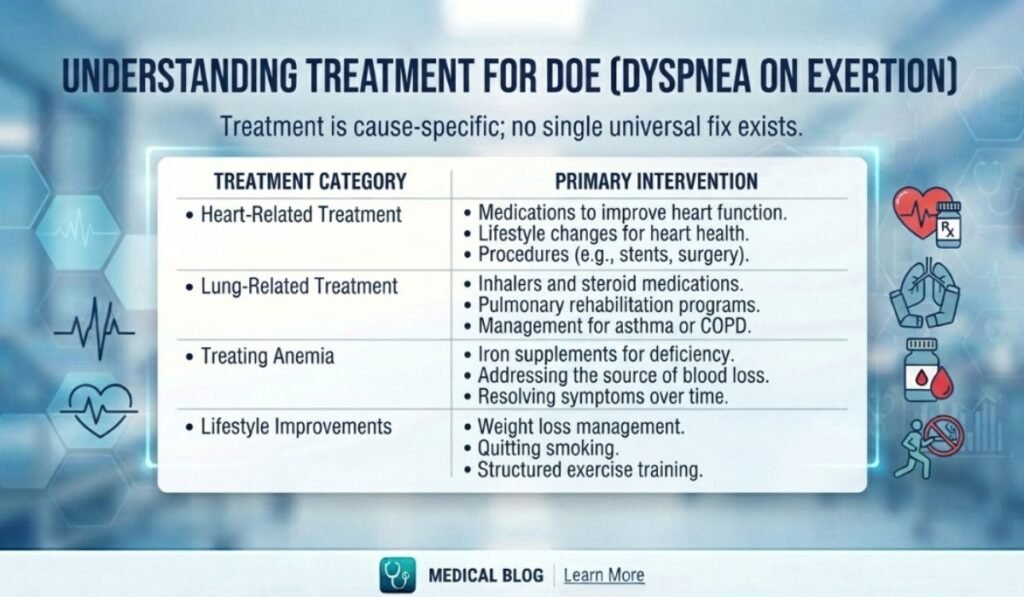
Treatment depends entirely on the root cause. There isn’t a single fix for every case.
Heart-Related Treatment
Doctors may prescribe medications to strengthen heart function or reduce fluid buildup. Lifestyle changes often accompany these treatments. In severe cases, procedures or surgery may be necessary.
Lung-Related Treatment
Inhalers, bronchodilators, and steroids are commonly used. Pulmonary rehabilitation programs can also help. These treatments aim to improve airflow and reduce symptoms.
Treating Anemia
Iron supplements or dietary changes often resolve mild anemia. Severe cases may require further medical intervention. Correcting anemia usually improves DOE significantly.
Lifestyle Improvements
Weight management, regular exercise, and quitting smoking all help. These changes reduce strain on the heart and lungs. Over time, they can noticeably lower DOE symptoms.
Can DOE Be Prevented?
Some cases of DOE can be prevented through healthy habits. Others, especially those linked to chronic disease, require ongoing management rather than full prevention.
- Maintain a healthy weight
- Exercise regularly
- Avoid smoking
- Manage chronic conditions properly
- Get routine health checkups
When Is DOE a Medical Emergency?
DOE becomes an emergency when it appears suddenly and severely. Warning signs include chest pain, blue lips, confusion, or fainting. These symptoms require immediate medical attention.
Sudden, unexplained DOE should never be ignored. Fast evaluation can prevent serious complications.
Prognosis
The outlook for DOE depends on its underlying cause. Lifestyle-related DOE often improves with healthier habits. Chronic conditions like heart failure or COPD require ongoing management for long-term stability.
Early diagnosis generally leads to better outcomes. This is why understanding the DOE medical abbreviation meaning matters so much for patients.
How Doctors Use DOE in Medical Records
Doctors use DOE as shorthand in clinical documentation. It saves time while keeping records precise and standardized. Below are examples showing how DOE typically appears in charts.
Example 1
“Patient reports DOE after climbing two flights of stairs.”
Example 2
“DOE noted during six-minute walk test.”
Example 3
“History of DOE, worsening over the past three weeks.”
Example 4
“No DOE at rest; mild DOE with moderate activity.”
Example 5
“DOE associated with orthopnea, suggestive of heart failure.”
Real Patient Scenarios
Real-world examples make the DOE medical abbreviation meaning easier to understand.
Scenario 1: Heart Failure
A 68-year-old patient reports breathlessness while gardening. Testing reveals reduced heart pumping function. Treatment includes medication and lifestyle adjustments.
Scenario 2: Iron-Deficiency Anemia
A young woman feels breathless during light jogging. Blood tests show low iron levels. Supplementation resolves her DOE within weeks.
Scenario 3: Asthma
A teenager experiences wheezing and breathlessness during sports. An inhaler prescribed before exercise controls the symptoms. DOE no longer interferes with activity.
Scenario 4: Poor Physical Conditioning
An adult new to exercise notices breathlessness during workouts. Gradual training improves stamina over several weeks. This case shows DOE isn’t always disease-related.
Common Misconceptions About DOE
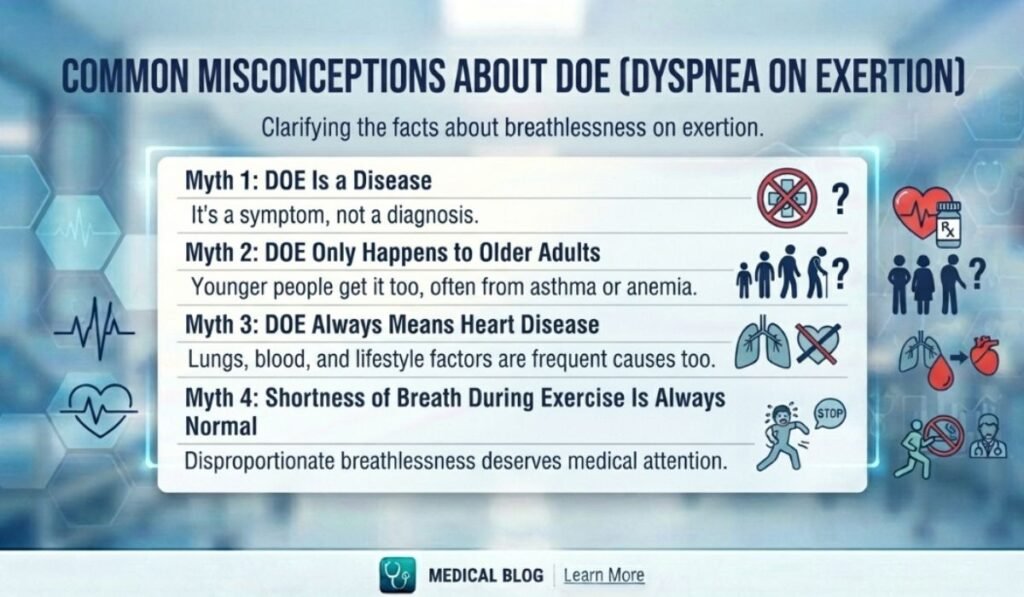
Myth 1: DOE Is a Disease
DOE is a symptom, not a diagnosis. It points toward an underlying issue rather than being one itself.
Myth 2: DOE Only Happens to Older Adults
DOE can affect people of any age. Young, healthy individuals can experience it too, especially with anemia or asthma.
Myth 3: DOE Always Means Heart Disease
While common, heart disease isn’t the only cause. Lung conditions, anemia, and lifestyle factors also play a role.
Myth 4: Shortness of Breath During Exercise Is Always Normal
Mild breathlessness during intense activity can be normal. However, breathlessness during light activity needs medical evaluation.
Frequently Asked Questions
What is the DOE Medical Abbreviation meaning?
It stands for “Dyspnea on Exertion” — shortness of breath during physical activity.
Does DOE count as a diagnosis on its own?
No, it’s a symptom pointing to an underlying cause.
How serious can DOE become?
Sudden or severe cases can be serious; mild deconditioning-related cases are usually not urgent.
What are the main causes behind dyspnea on exertion?
Heart disease, lung disease, anemia, obesity, and poor fitness.
Is it possible for anxiety to trigger DOE?
Yes, anxiety can mimic exertional breathlessness.
Which tests confirm a diagnosis of DOE?
X-rays, ECGs, echocardiograms, and pulmonary function tests.
Can someone recover from DOE over time?
Yes, with treatment of the underlying cause or better conditioning.
Is a doctor’s visit necessary for DOE symptoms?
Yes, especially if new, worsening, or limiting daily life.
What does DOE fully expand to in healthcare?
“Dyspnea on Exertion.”
How is DOE typically noted on a medical chart?
As breathlessness occurring during physical activity.
Is DOE simply another term for shortness of breath?
It’s a more specific type, tied directly to exertion.
Which type of doctor usually manages DOE?
Cardiologists and pulmonologists.
Could DOE be an early warning sign of heart disease?
Yes, often one of the first noticeable symptoms.
Do older adults experience DOE more often?
More common with age, but possible at any age.
Is emergency care always required for DOE?
No, only for sudden or severe presentations.
Does staying active help lower DOE symptoms?
Yes, improved fitness often reduces deconditioning-related symptoms.
Conclusion
Understanding the DOE medical abbreviation meaning helps patients communicate symptoms clearly and seek timely care. DOE, or Dyspnea on Exertion, is a common but important clinical sign. It can stem from heart issues, lung disease, anemia, or simple deconditioning.
Recognizing the DOE medical abbreviation meaning early can make a real difference in diagnosis and treatment outcomes. If you or someone you know experiences unexplained breathlessness during activity, don’t ignore it. A timely medical evaluation can identify the cause and guide the right treatment plan.
